Interspecies Communication with Your Dog

Interspecies communication begins with a simple change in attitude. Your dog is not an object to manage. Your dog is a beloved individual to know. That does not mean forgetting your dog is a dog. Dogs need structure, rhythm, food, rest, training, manners, and clear guidance. But it does mean we stop treating them like accessories to our lives that are either obeying us or failing us. This may sound harsh, but I can’t tell you how many families I have witnessed this happen in over my 50+ yrs.  So, Your dog is a living relationship. They are watching you. Learning you. Feeling the rhythm of the home. Responding to your tone, your timing, your steadiness, your frustration, your affection, your absence, your presence, and your care. When you begin to relate to your dog as a beloved life with their own nature, something changes. You start noticing more.
Your dog starts trusting more.
Training becomes less of a battle.
Manners become part of belonging.
The home becomes a shared culture.
And communication becomes something far deeper than commands. This is the heart of the Royal Frenchel Way of Life. Dogs are not here merely to be managed. They are here to be known.

Dogs Are Not Objects to Manage - They are Treasured Family to Know Well and Enjoy

So much of ordinary dog “ownership” has been built around control. Make the dog stop.

Make the dog sit.

Make the dog listen.

Make the dog behave.

Make the dog fit into the human schedule.
Of course dogs need manners. Of course they need training and to learn how to live safely and respectfully inside a human home. But if we begin only from control, we miss the relationship. A dog who is only managed may obey in moments, but they may not feel truly known. And let’s face it, they aren’t if that is their life. A dog who does not feel known may become anxious, resistant, disconnected, overly needy, reactive, or difficult in ways that are really cries for relationship. Interspecies communication begins when we ask a different question. Not only, “How do I make my dog do what I want?” But: Who is this dog?

What are they showing me?

What do they need?

What do they understand?

What are they afraid of?

What brings them joy?

What helps them settle?

How do they learn?

How do I become trustworthy to them? That is where communication begins. Not with dominance. With attention.
Royal Frenchels riding together in a stroller at a mall.

The Attitude You Bring Matters Most

The current Royal Frenchel teaching on interspecies communication says the most important part of living with and training dogs is the attitude you bring to them. That is still the heart of this page.  If you approach your dog as a problem, everything becomes correction. If you approach your dog as an accessory, everything becomes appearance. If you approach your dog as a child with fur, you may forget they are still a dog with canine needs. But if you approach your dog as a beloved individual — a real dog, a real companion, a real life you are learning — the whole relationship opens. You begin to see them. You begin to notice the flick of an ear, the softening of the eye, the way they turn away when overwhelmed, the way they come close when your energy is calm, the way they ask questions with their body, the way they hold tension, the way they ask for joy. Dogs communicate constantly. The question is whether we are present enough to receive it. This is why attitude matters. Your dog is not asking you to be perfect. They are asking you to be awake.
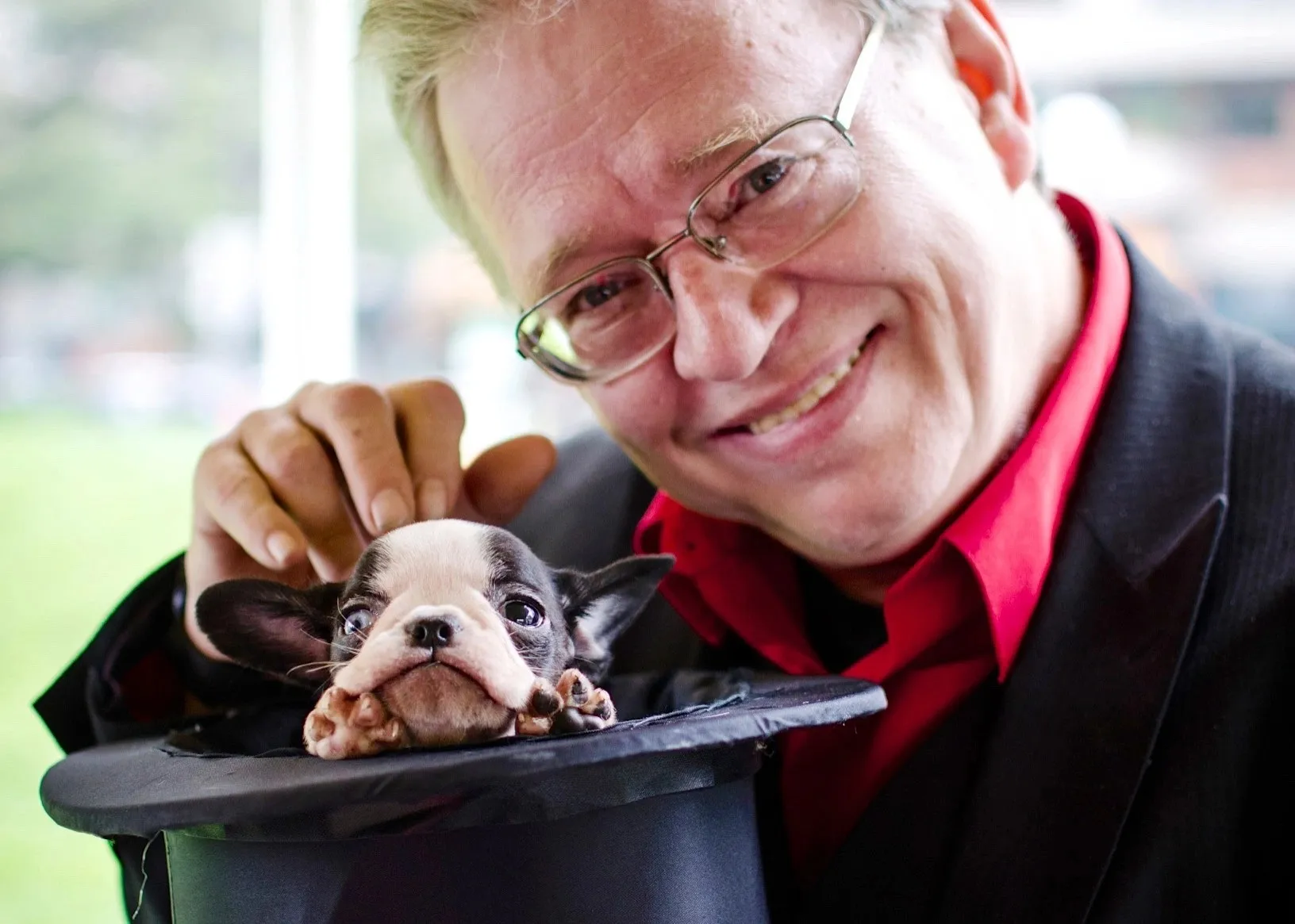
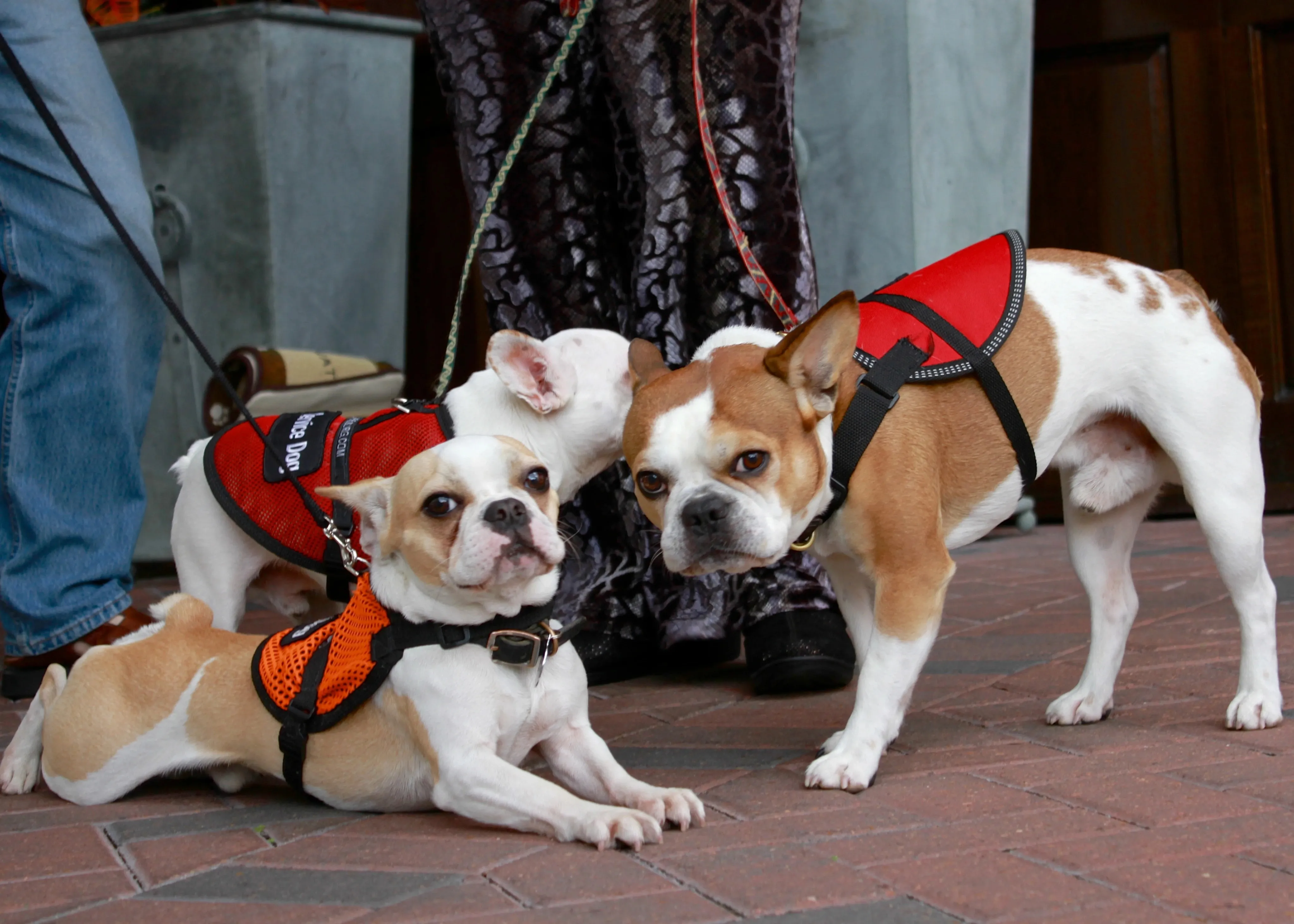
Royal Frenchel puppy sitting inside a magician’s hat.Two Royal Frenchel service dogs calmly meeting in a public setting.
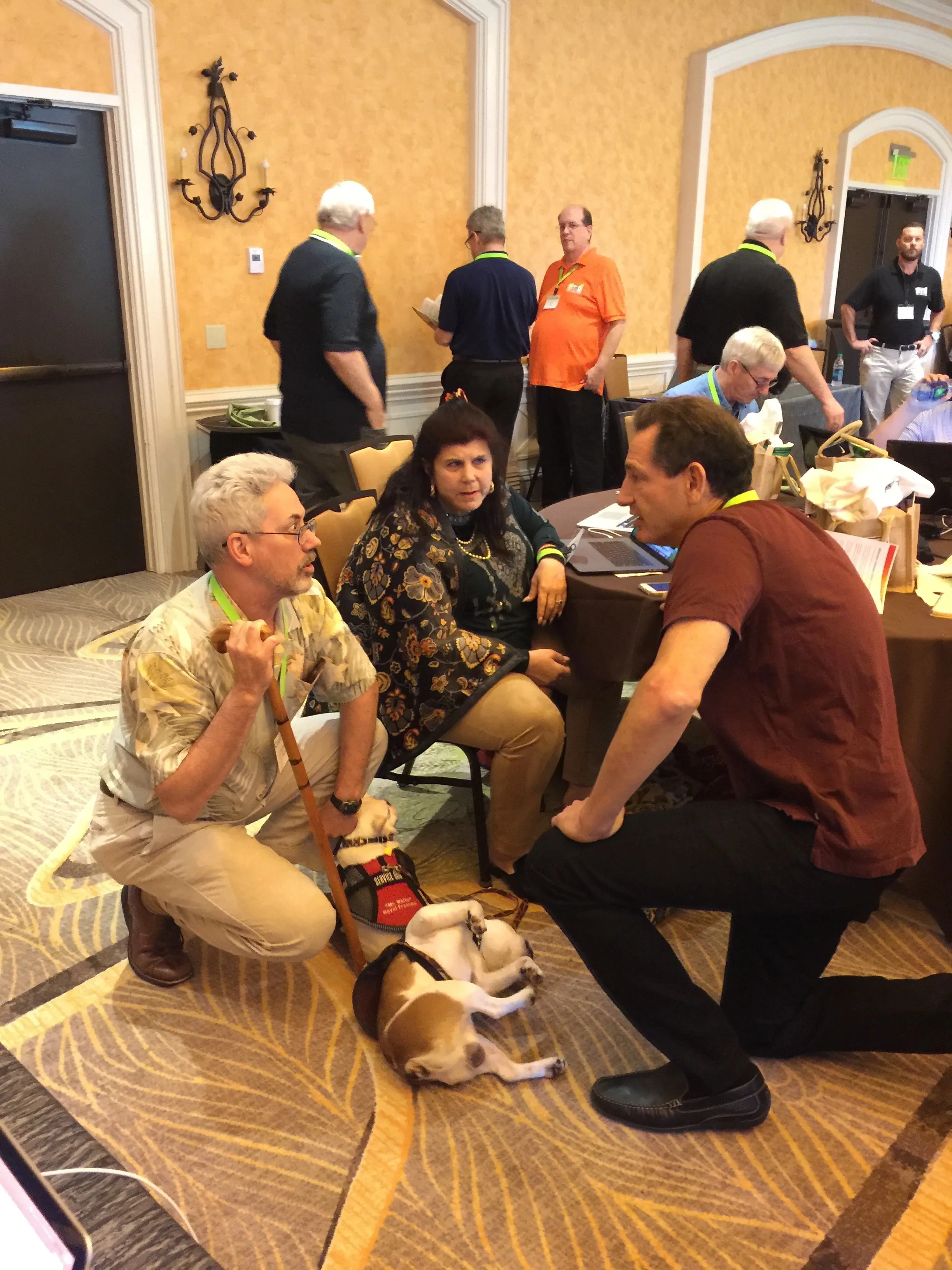
Group gathered around a Royal Frenchel during an indoor meeting.

Witness: The First Law of Relationship

The first law of interspecies communication is witness. To witness your dog means to see them with genuine interest. Not glance at them.

Not use them.

Not rush past them.

Not assume you already know everything about them. See them. Watch the way they move through the home. Notice how they greet the day. Notice what sounds make them pause. Notice how they look at you when they are unsure. Notice what brings them joy. Notice where they soften. Notice when they are tired. Notice when they are trying to tell you something. This is not complicated, but it is rare. Most people look at their dogs often. Fewer people truly witness them. Witnessing says: “I am interested in who you are.” That single attitude can change a relationship. A dog who is witnessed begins to feel known. A dog who feels known can relax. A dog who relaxes can trust. A dog who trusts can learn. A dog who learns can belong more deeply. Witnessing is not sentimental. It is practical. It is the foundation of training, manners, bonding, housebreaking, travel, trust, and the intuitive knowing people often wish they had with their dogs.

Consistent Physical Care: The Second Law

Dogs are spiritual little beings in very physical bodies. They need food. Water. Rest. Potty rhythm. Exercise. Grooming. Clean spaces. Health care. Safe handling. Predictability. Interspecies communication is not only quiet intuition. It is also the bowl being filled on time. It is the dog knowing when they will go outside. It is the crate or bed where they can rest. It is clean water. It is good nutrition. It is a body that feels cared for. It is a home rhythm that tells the dog, “Life here is steady.”
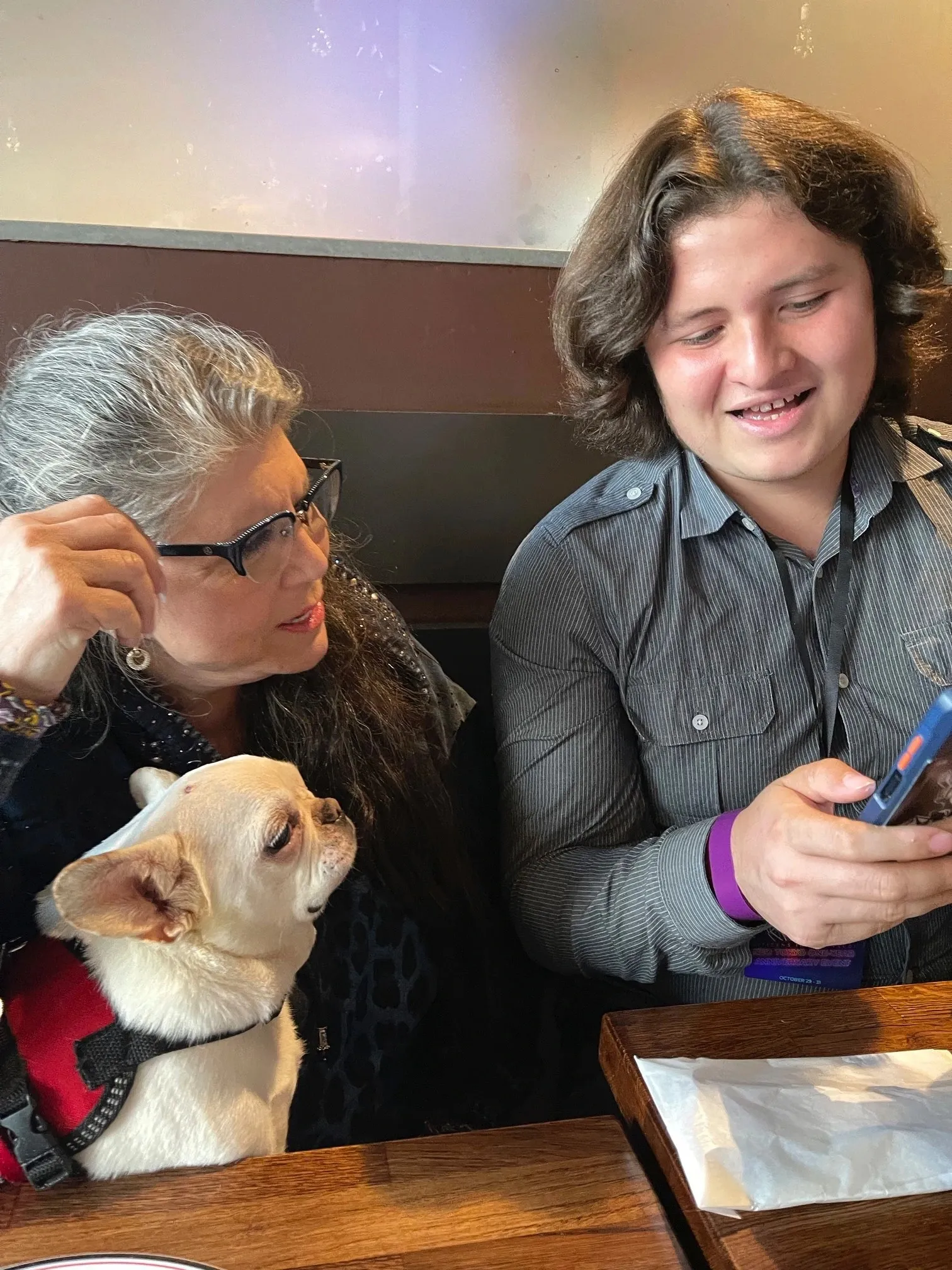
Royal Frenchel looking up at two people seated at a restaurant table.
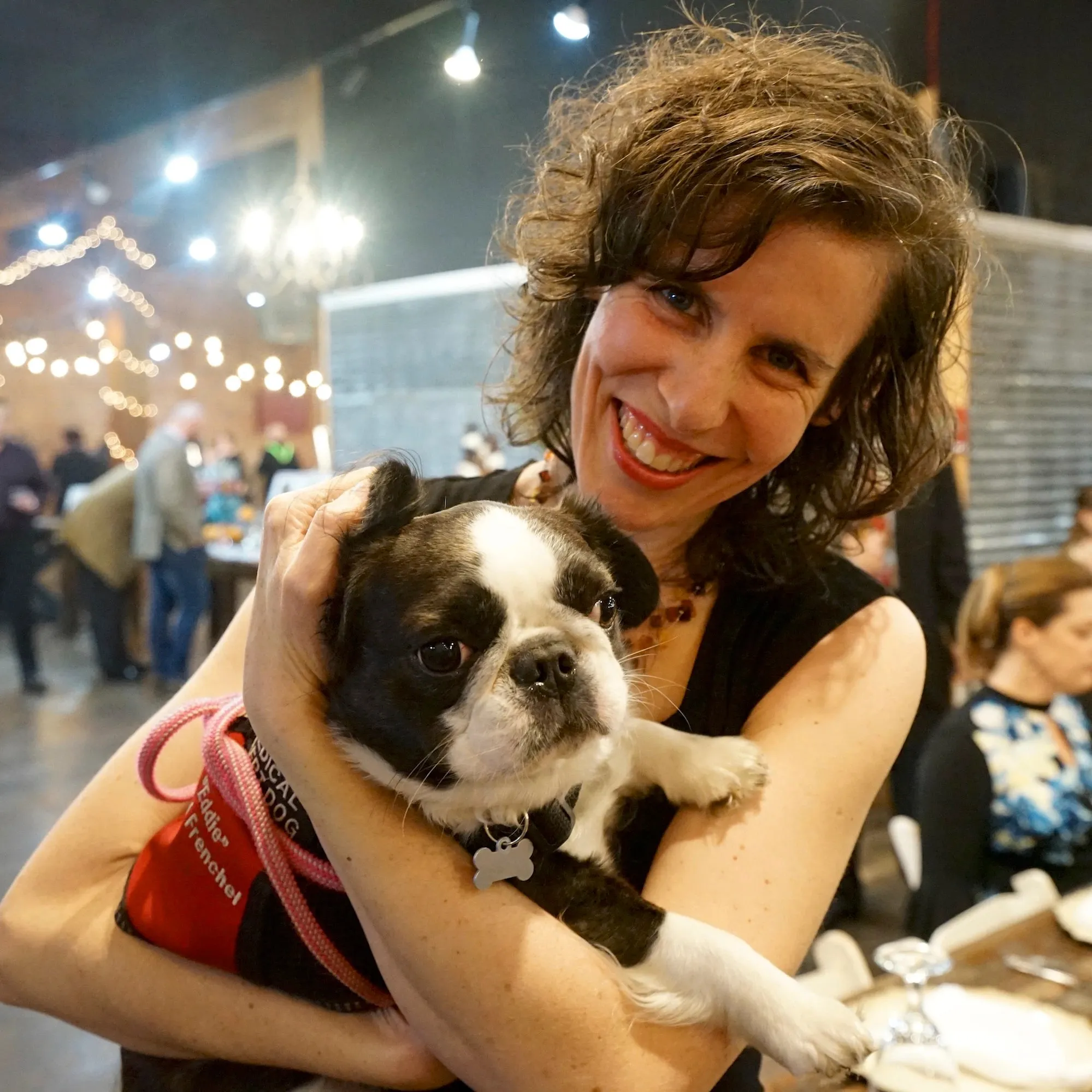
Woman smiling while holding a Royal Frenchel at an evening event.
Dogs relax when their needs are met consistently. That consistency creates trust. And trust creates communication. A dog who does not know when they will eat, rest, potty, or be handled cannot fully relax into the relationship. Their body is busy wondering what happens next. But a dog whose physical needs are met with steadiness can begin to open emotionally. This is why daily care is not separate from bonding. Daily care is bonding. The bowl is bonding.

The potty rhythm is bonding.

The rest schedule is bonding.

The gentle grooming is bonding.

The calm handling is bonding.

The reliable person is bonding. That is the Royal way.

Attentive Interaction: The Third Law

Dogs also need time that is truly theirs. Not petting them while answering emails. Not half-watching them while scrolling your phone. Not tossing a toy while your mind is somewhere else. They need a few minutes where your attention belongs to them. This is the heart of attentive interaction. It might be 5 Minute Hands-On Play.
It might be a gentle cuddle.
It might be a little game.
It might be a quiet check-in.
It might be sitting with your dog and asking, “Who are you today?” The form can change. The attention is what matters. Every dog needs to know: “My person sees me.”
“My person enjoys me.”
“My person listens.”
“My person cares about my world.”
“I am not just furniture in this house.”
“I belong.” This does not mean your dog needs constant attention. Actually, the opposite is often true. A dog who receives real, focused attention often settles better because they are not starving for connection. Five minutes of full presence can do more than hours of distracted affection. That is why attentive interaction is one of the great secrets of a healthy human-dog relationship.
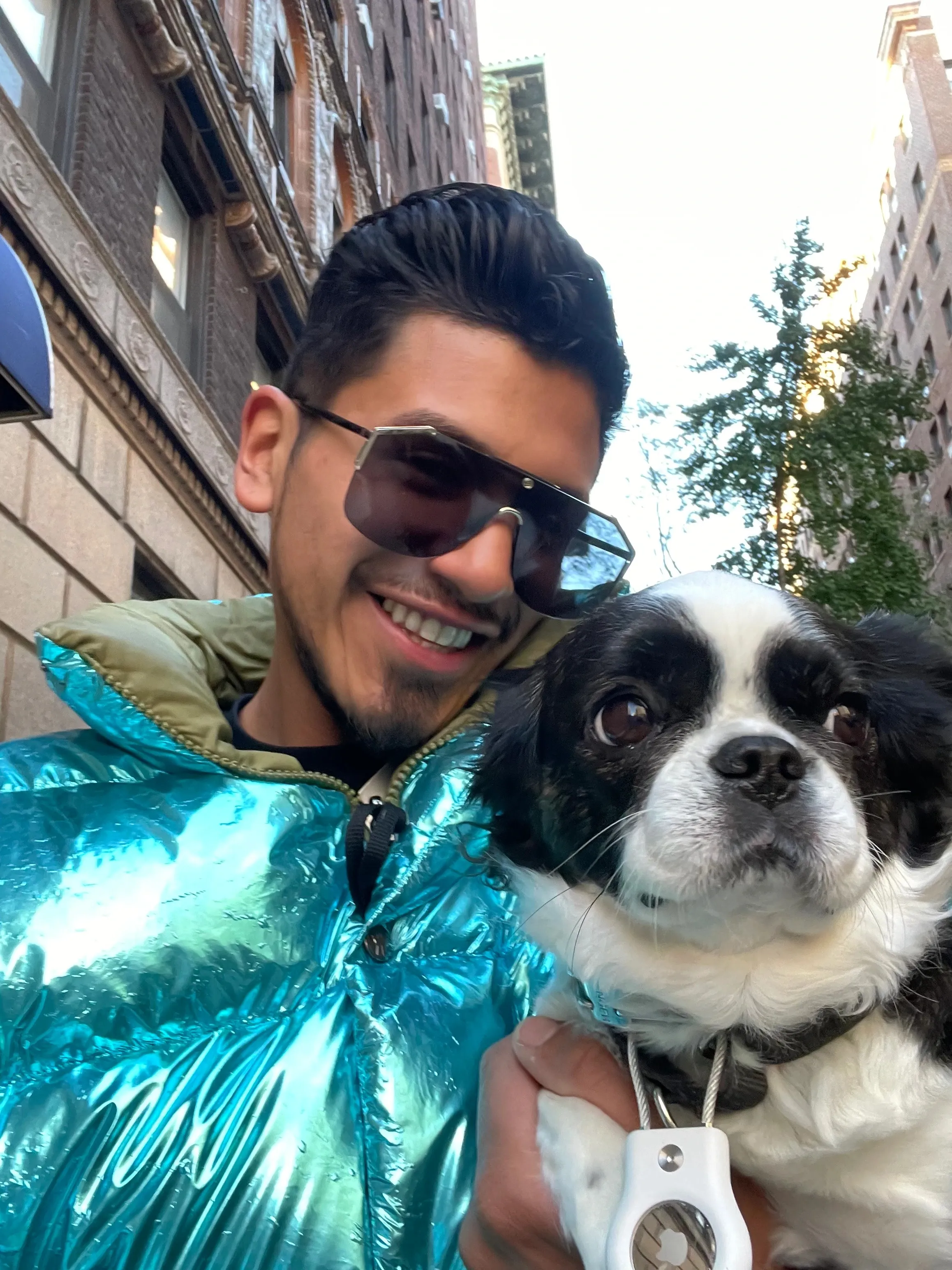
Man holding a Royal Frenchel in a city setting.

The Fourth Law: Your Dog Has Responsibilities Too

A relationship is not one-sided. Once a dog is witnessed, cared for, and given meaningful interaction, the dog also has responsibilities inside the pack. This is where some people misunderstand love. Love does not mean a dog can do anything they want. Love means the dog is guided into belonging. A dog in a healthy home learns: Where to potty.

How to greet.

How to rest.
 How to wait.
 How to travel. 
How to be safe.
 How to respond when called.
How to respect food, people, space, and other dogs.
How to live inside the family rhythm.
These are not harsh expectations. These are the agreements that allow a dog to live a bigger life. A dog with poor manners may have to stay home. A dog with good manners can be welcomed in. That matters because Royal Frenchels are meant to be included — in the home, in the car, at the second home, around children and grandchildren, at work when appropriate, and in the ordinary rhythm of real life. Good manners are not the opposite of love. Good manners are love made livable.

Intuition Is Built Through Attention

People sometimes think intuition with dogs is strange or mysterious. I do not see it that way. Intuition often grows from attention. When you witness your dog every day, meet their physical needs consistently, and give them focused interaction, you begin to know them in a way that feels deeper than thought. You start sensing when something is off. You notice tiny changes in movement. You feel when they need to potty. You know when they are overstimulated before they act out. You sense when they are tired. You can feel when they are unsure. You know when they are happy in a way that does not need words. This is not fantasy. This is relationship. Your mind may not be able to consciously track every small cue, but your body and heart begin gathering the information. Over time, that becomes intuition. You know because you have been paying attention. Your dog knows too. They know when you are truly present. They know when your care is reliable. They know when your voice is safe. They know when your hands are kind. They know when you mean what you say. Interspecies communication is not something you force. It is something you cultivate.
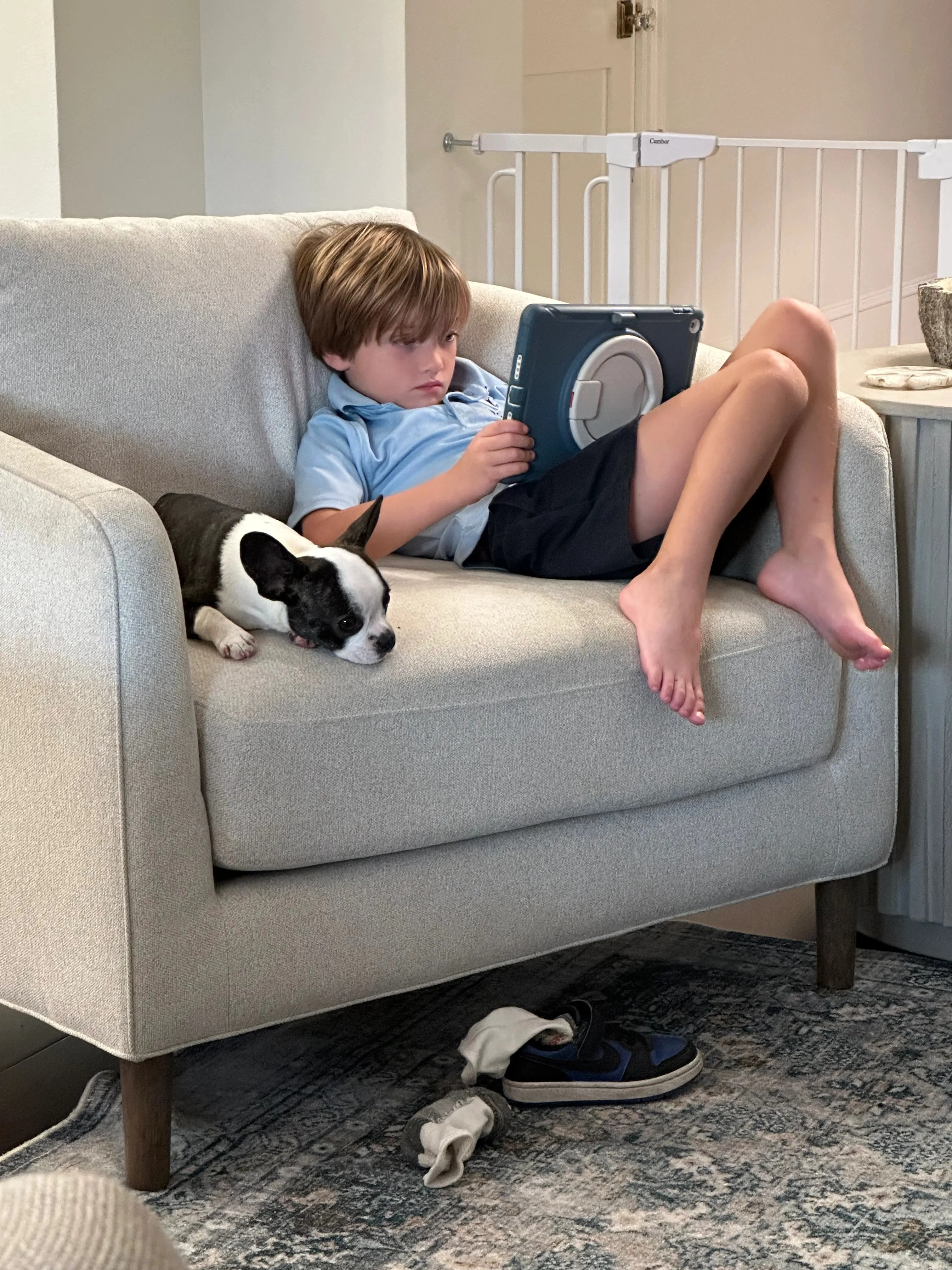
Boy sitting on a couch with a Royal Frenchel resting beside him.
Girl holding a trophy while standing with her Royal Frenchel.

The Way of the Dog Connection

This page belongs deeply with The Way of the Dog. The book is not only about training. It is about relationship, intuitive bonding, trust, and creating an interspecies culture where both human and dog thrive.  That is exactly what interspecies communication is. It is not a trick. It is not performance. It is not a person pretending their dog is human. It is a way of living with your dog as a beloved individual inside a shared culture. The Way of the Dog teaches that modern companionship requires a new level of awareness. Dogs have moved from barns and yards into beds, cars, offices, airplanes, family rooms, second homes, and the emotional center of human life. That shift matters. If dogs are going to live this closely with us, we need to understand them more deeply. We need to build trust.
We need to learn their language.
We need to create rhythm.
We need to bring manners.
We need to respect their dogness.
We need to love them as individuals.
We need to build an interspecies family that actually works. That is the deeper teaching behind this page.
Read about the way of the dog
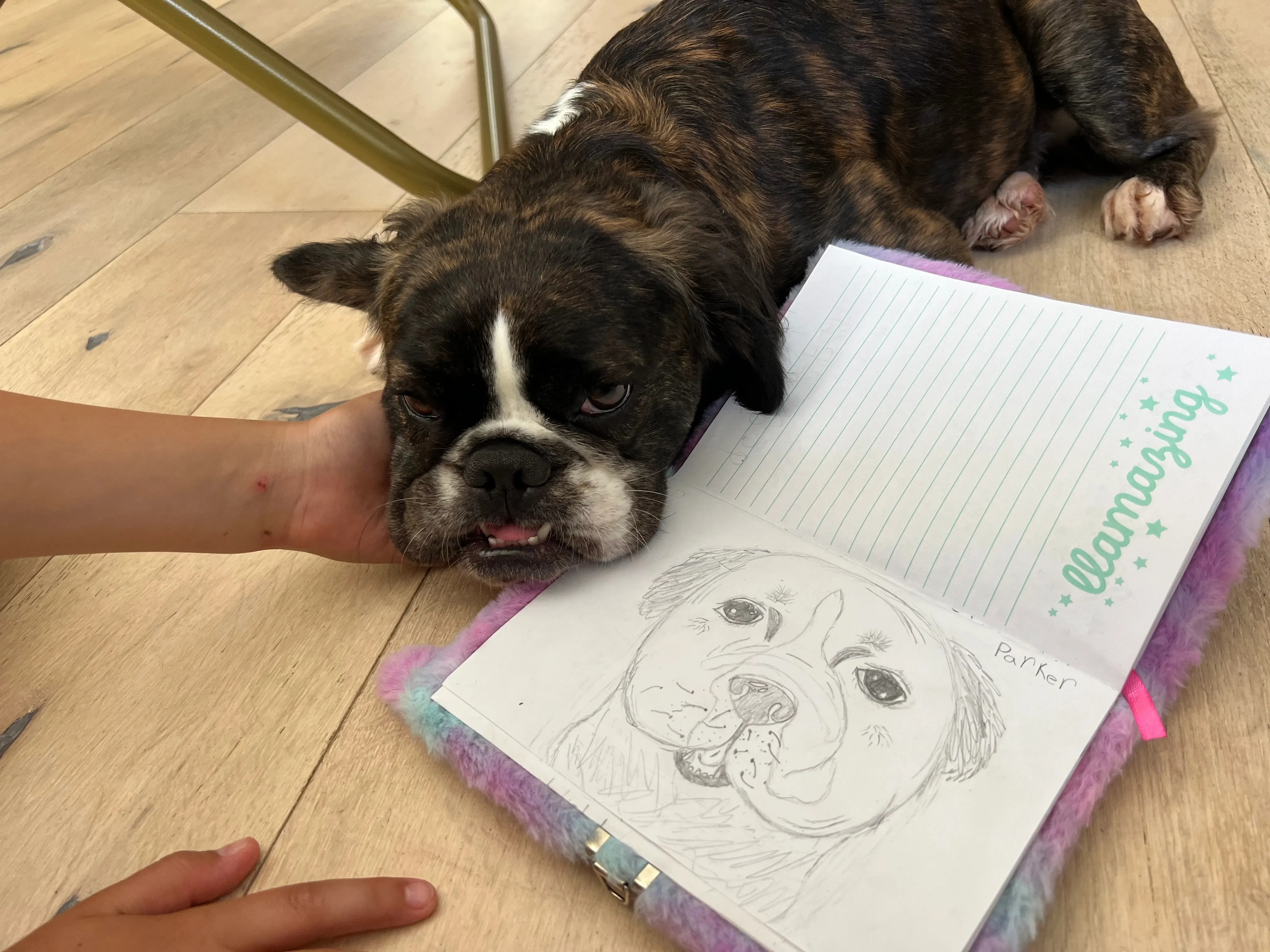
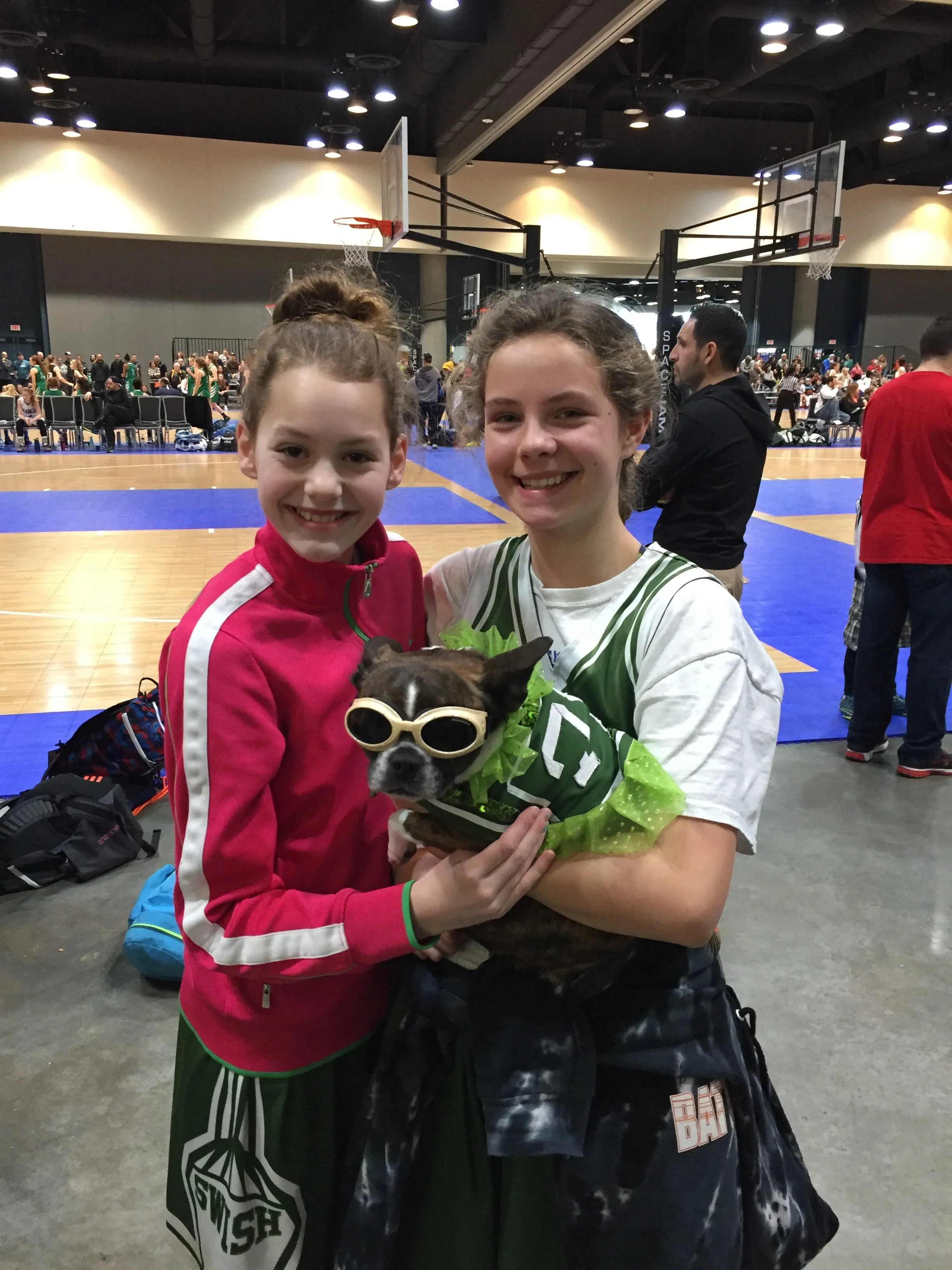
Royal Frenchel resting by a drawing of a dog on a table.Two girls holding a Royal Frenchel at an indoor event.

5 Minute Hands-On Play as a Communication Practice

5 Minute Hands-On Play is one of the simplest ways to begin interspecies communication. For five minutes, you give your dog full attention. You touch gently. You look softly. You ask questions. You listen. You laugh. You notice. You let your dog feel that they are being seen and enjoyed. This practice is not rough play. It is not training disguised as affection. It is not overstimulating your puppy until they become nippy and wild. It is focused, loving, curious attention. The live Royal Frenchel Hands-On Play page teaches this ritual as a daily practice for communication, connection, well-being, and even housebreaking support.  That makes sense because puppies learn through patterns. When your puppy potties outside and then comes inside for five minutes of connection, they begin to link rhythm, success, and relationship. When your dog receives daily focused attention, they begin to trust your presence. When they trust you, they listen more naturally. This is how training becomes relationship. This is how communication becomes lived.
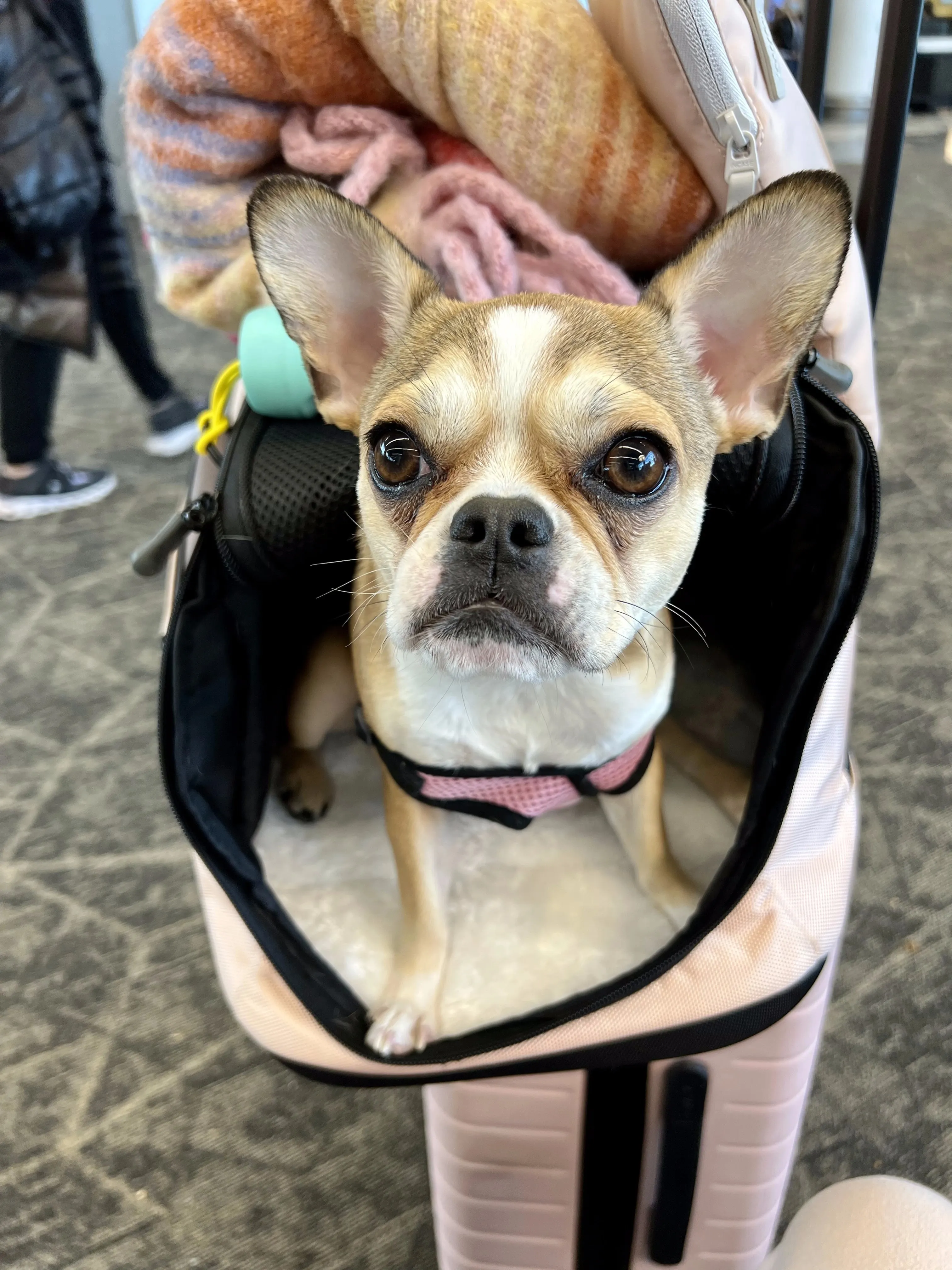
Royal Frenchel peeking calmly out of a travel carrier.

How Dogs Communicate Without Words

Dogs are speaking all the time. Not usually in words. With posture.

Eyes.

Ears.

Tail.

Breath.

Tension.

Softness.

Movement.

Distance.

Pace.

Stillness.

Leaning in.

Turning away.

Pausing.

Following.

Avoiding.

Seeking.
A dog may tell you they are unsure by looking away. They may tell you they are tired by becoming mouthy or restless. They may tell you they need to potty by wandering, sniffing, circling, or suddenly disconnecting. They may tell you they trust you by softening their body. They may tell you they are overwhelmed by getting louder or busier. If we only wait for words, we miss almost everything. Interspecies communication asks us to become better witnesses. Noticing is love.

Communication Makes Training Easier

Training becomes easier when the relationship is clear. A dog who trusts you is easier to guide. A dog who feels seen is more likely to look to you. A dog whose needs are met is less likely to act out from frustration. A dog who receives focused interaction is less likely to demand attention through chaos. This is why interspecies communication is not separate from training. It is the ground underneath training. When you understand your dog, you can guide more effectively. When your dog understands you, they can respond more naturally. When the relationship feels safe, correction does not have to be dramatic. The dog learns: This is how we greet.

This is where we potty.

This is how we ride in the car.
This is how we settle.

This is how we wait.


This is how we belong in this home. That is the goal. Not a dog who obeys because they are afraid. A dog who understands because they are in relationship.
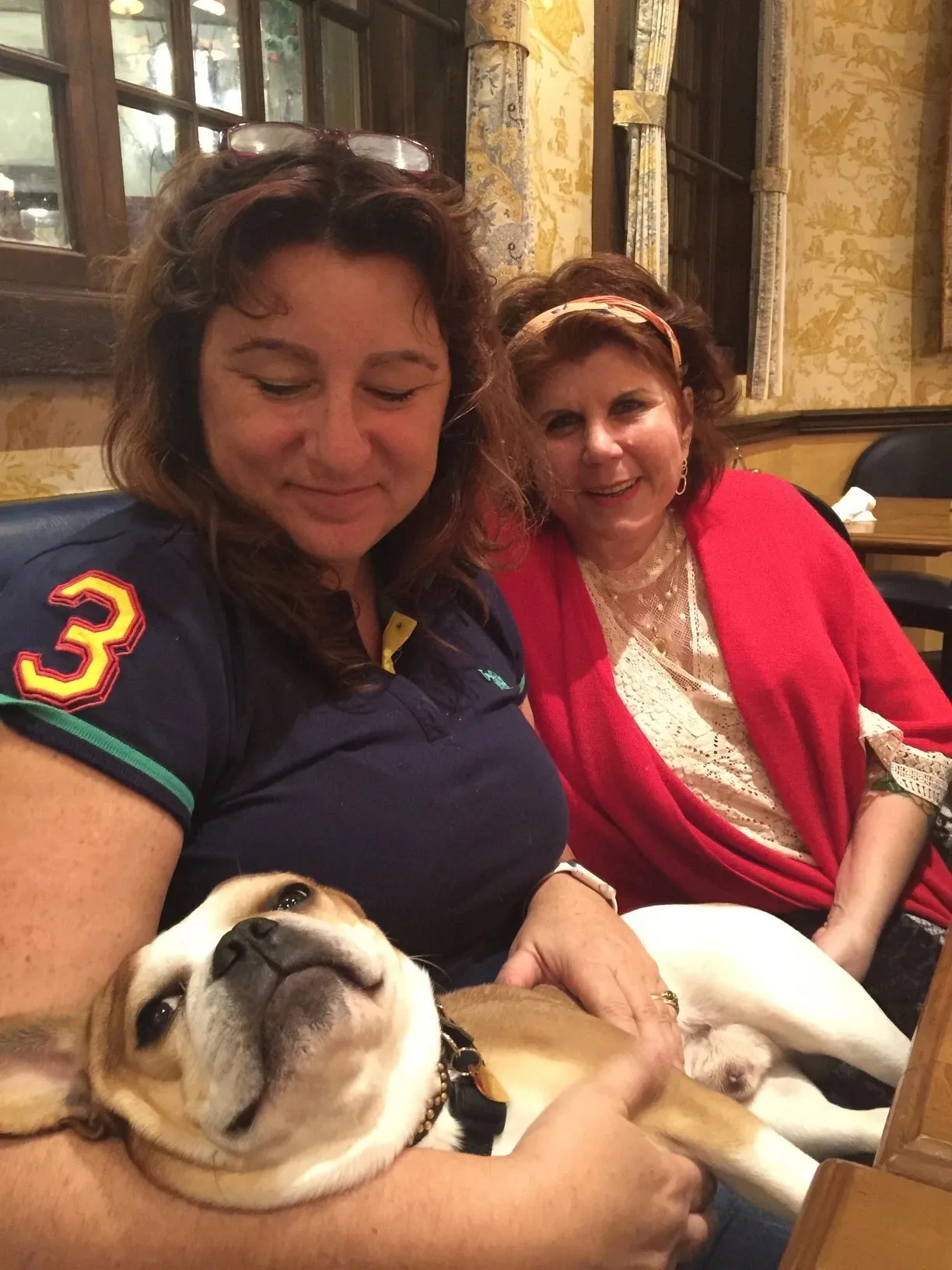
Royal Frenchel resting with two women at a restaurant.
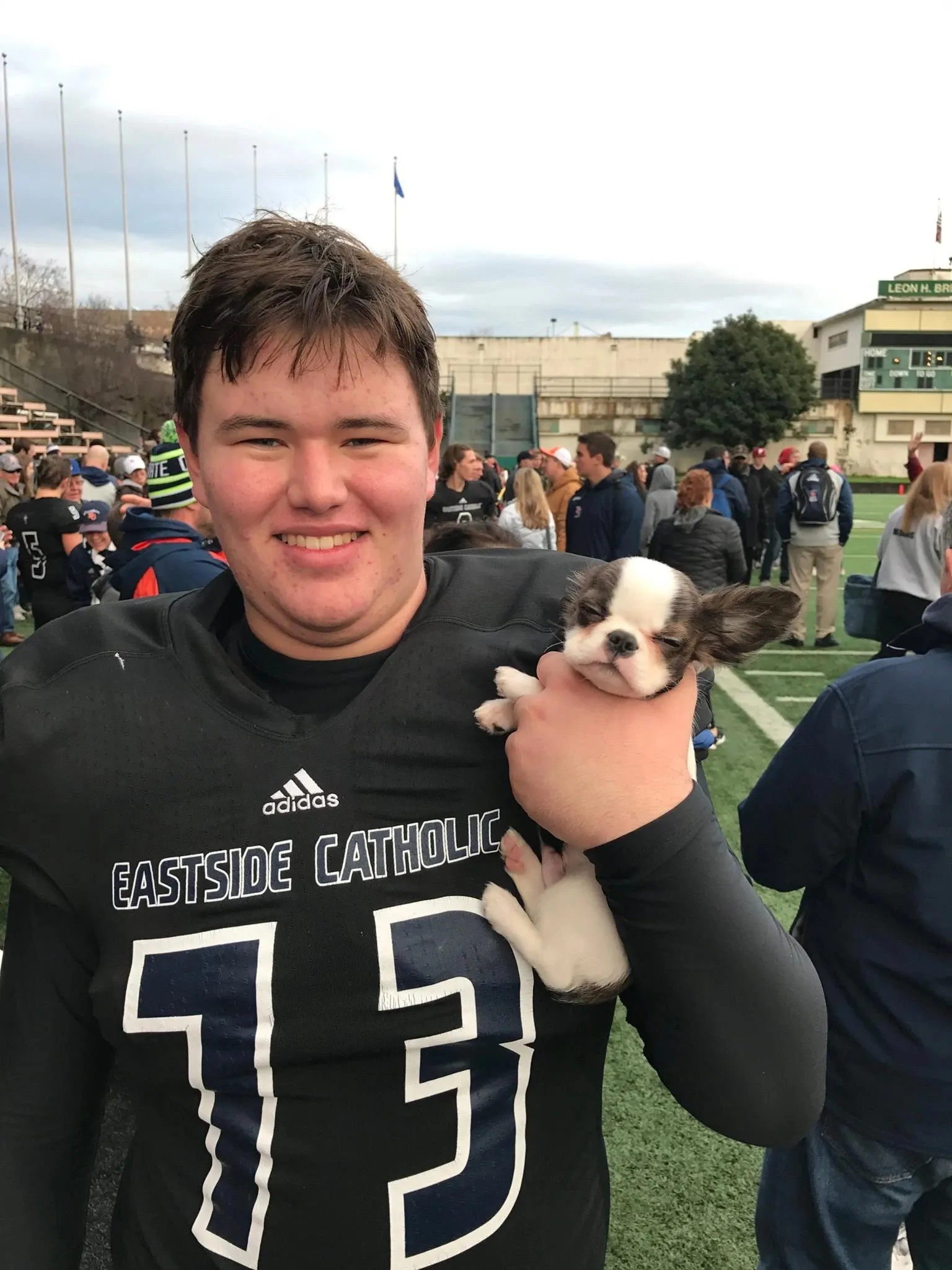
Football player holding a small Royal Frenchel puppy outdoors.Family standing by the water with a Royal Frenchel.

Communication Helps with Housebreaking

Housebreaking is not only a potty issue. It is a communication issue. Your puppy needs to understand where potty happens.
You need to understand your puppy’s signals.
The home needs a rhythm. The puppy needs repeated success. The human needs enough attention to notice what is happening before accidents become habits. When trust is strong, housebreaking becomes easier. Your puppy learns: My person notices me.

My person takes me out.

My person celebrates the right thing.

My person helps me succeed.

This is where we potty.

This is our rhythm. That is why 5 Minute Hands-On Play can be such a helpful support after potty trips. It turns success into connection. The puppy begins to feel that the whole pattern makes sense. Potty outside.
Come in.
Connect.
Belong. This is not a replacement for consistency. It is a way of making consistency relational.

Royal Frenchels and Emotional Intelligence

Royal Frenchels often respond beautifully to this kind of relationship because they were created for companionship. They are not only affectionate. They are relational. Many Royals watch their people carefully. They learn the home rhythm. They notice the emotional tone of the room. They want to know where they belong. They often respond to calm leadership, daily attention, and loving consistency with a level of emotional presence that surprises people. This is why interspecies communication matters so much for Royal Frenchel families. When a dog is emotionally intelligent, the relationship can go deeper. But emotional intelligence also needs guidance. A sensitive, intuitive dog still needs boundaries. They need routine. They need manners. They need to know what is expected. They need to feel safe in the structure of the home. This is what makes a Royal thrive: Love and rhythm.

Freedom and manners.

Intuition and care.

Softness and clarity.

Deep connection and real dog needs. That is the balance. That is the Royal way.
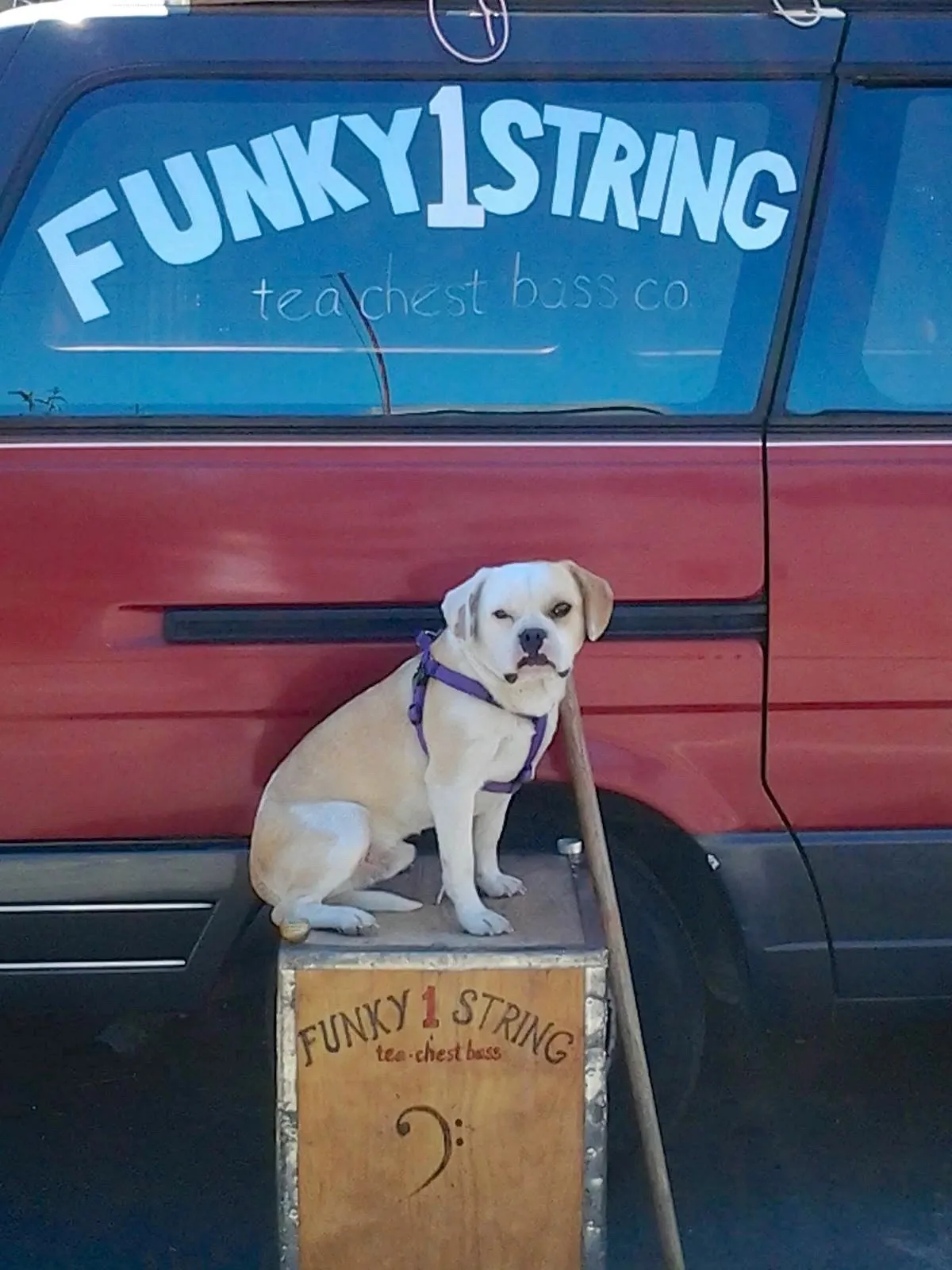
Royal Frenchel sitting on a wooden box in front of a red van.
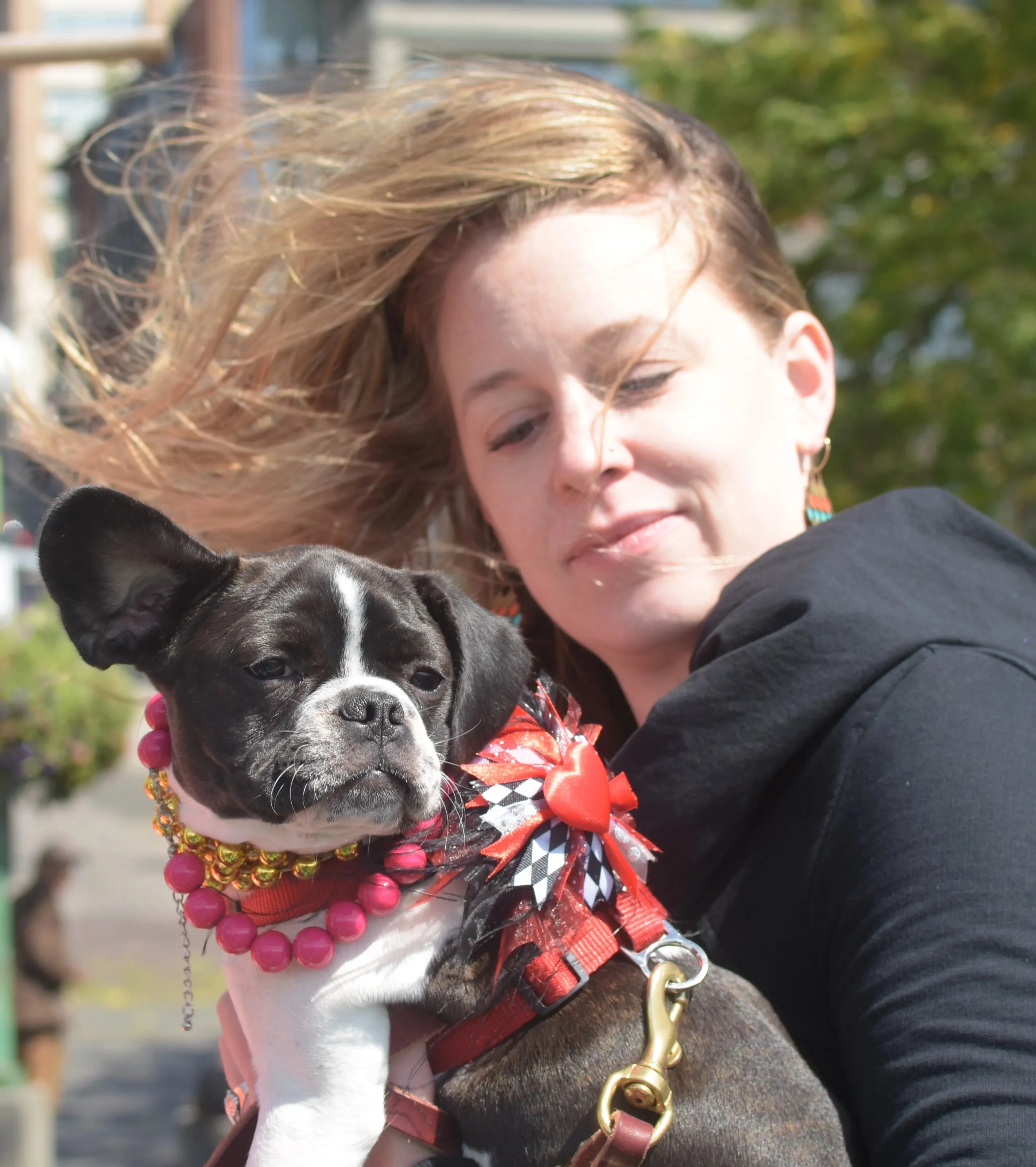
Woman cuddling a Royal Frenchel outside in bright sunlight.

Interspecies Communication Is Not Permissiveness

Sometimes people think communicating with a dog means never correcting them. That is not true. A healthy relationship includes clear expectations. Dogs need to know what works and what does not work in the pack. No fighting.

No bullying.

No indoor potty.

No harassment barking.

No chewing furniture.

No unsafe behavior.

Come when called.

Respect food, space, people, and other dogs. These are not mean rules. These are the agreements that keep everyone safe and happy. The difference is that correction should happen inside a relationship, not as a substitute for one. If the human has not witnessed the dog, cared for the dog, or given the dog focused interaction, correction alone can erode trust. But when the dog already knows your care, your voice, your rhythm, and your love, correction can become clear information rather than emotional chaos. This is why the first three laws matter before the fourth. Witness.

Care.

Interact.

Then guide. That order matters.

Communication for Travel, Work, and Two Homes

Interspecies communication becomes especially important when life moves. If your dog travels, goes to work, lives between homes, visits family, rides in cars, stays in hotels, or moves between quiet and busy environments, they need to understand more than commands. They need to trust the relationship. They need to know that the car is safe. The carrier is safe. The second home is safe. The office has a rhythm. The hotel is temporary. The family visit has rules. The new room is still a place where their person is present. Royal Frenchels often do well in these situations because many are deeply connected to their people. For a Royal, home is not only a location. Home is their person. But that truth is strengthened through communication. A familiar blanket.

A consistent potty rhythm.

A calm arrival.

A few minutes of focused attention.

Clear expectations.

Gentle leadership.
A person who knows the dog. This is how a Royal learns to belong in more than one place.
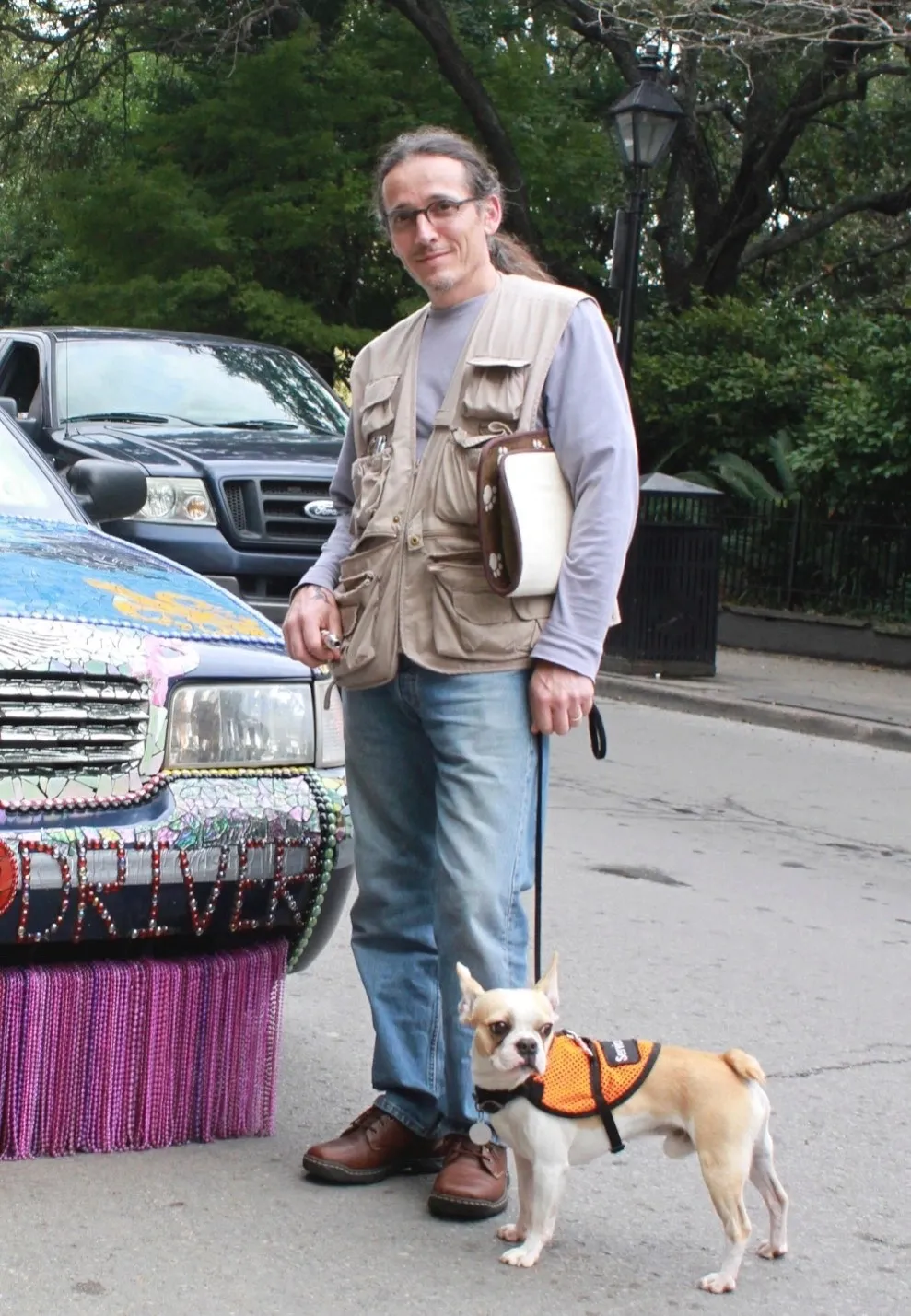
Royal Frenchel service dog standing beside their owner on a street.
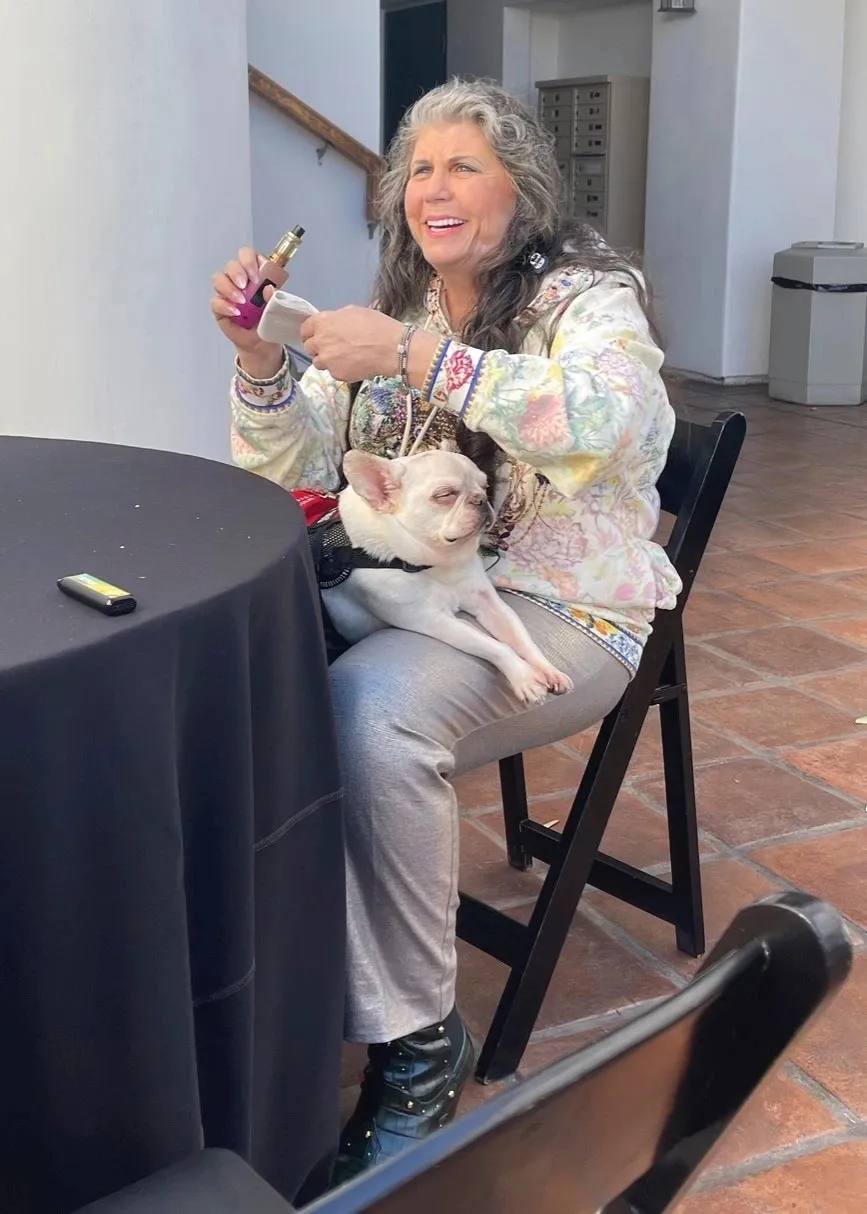
Woman sitting at a table with a Royal Frenchel on her lap.

Communication with Seniors, Children, and Families

A dog living with a family has to understand many kinds of people. Children. Grandchildren. Seniors. Visitors. Caregivers. Work colleagues. Family members with different voices, movements, and energy levels. This is why family culture matters. Children need to be taught to listen to the dog’s body. Seniors may need a dog who is softer, calmer, or more intuitive. Families with visiting grandchildren may need a sturdier size and a puppy with the right temperament. A person living alone may need a dog who brings warmth without becoming too much. Interspecies communication is not only between one person and one dog. It becomes the culture of the household. How do we greet the dog?

How do we let the dog rest?

How do children touch the dog?

How do we handle meals?

How do we keep routines consistent?

How do we notice stress before it becomes behavior?

How do we help the dog belong safely with everyone? This is the kind of culture Royal Frenchel families can build beautifully.

A Practice You Can Begin Today

You can begin interspecies communication today. Not by trying to be psychic. Not by forcing something mystical. Begin by witnessing. Look at your dog today with fresh eyes. Notice what they do when you enter the room. Notice when they soften. Notice when they look away. Notice what they do after they eat. Notice how they ask to go out. Notice what brings them joy. Notice what makes them unsure. Then care consistently. Food. Water. Rest. Potty. Movement. Cleanliness. Safety. Then interact attentively. Five minutes of focused connection. Ask a question. Touch gently. Listen. Laugh. Be curious. Do this daily, and something will grow. You may not be able to explain it at first. But your dog will feel different to you. And you will feel different to your dog. That is where the conversation begins.
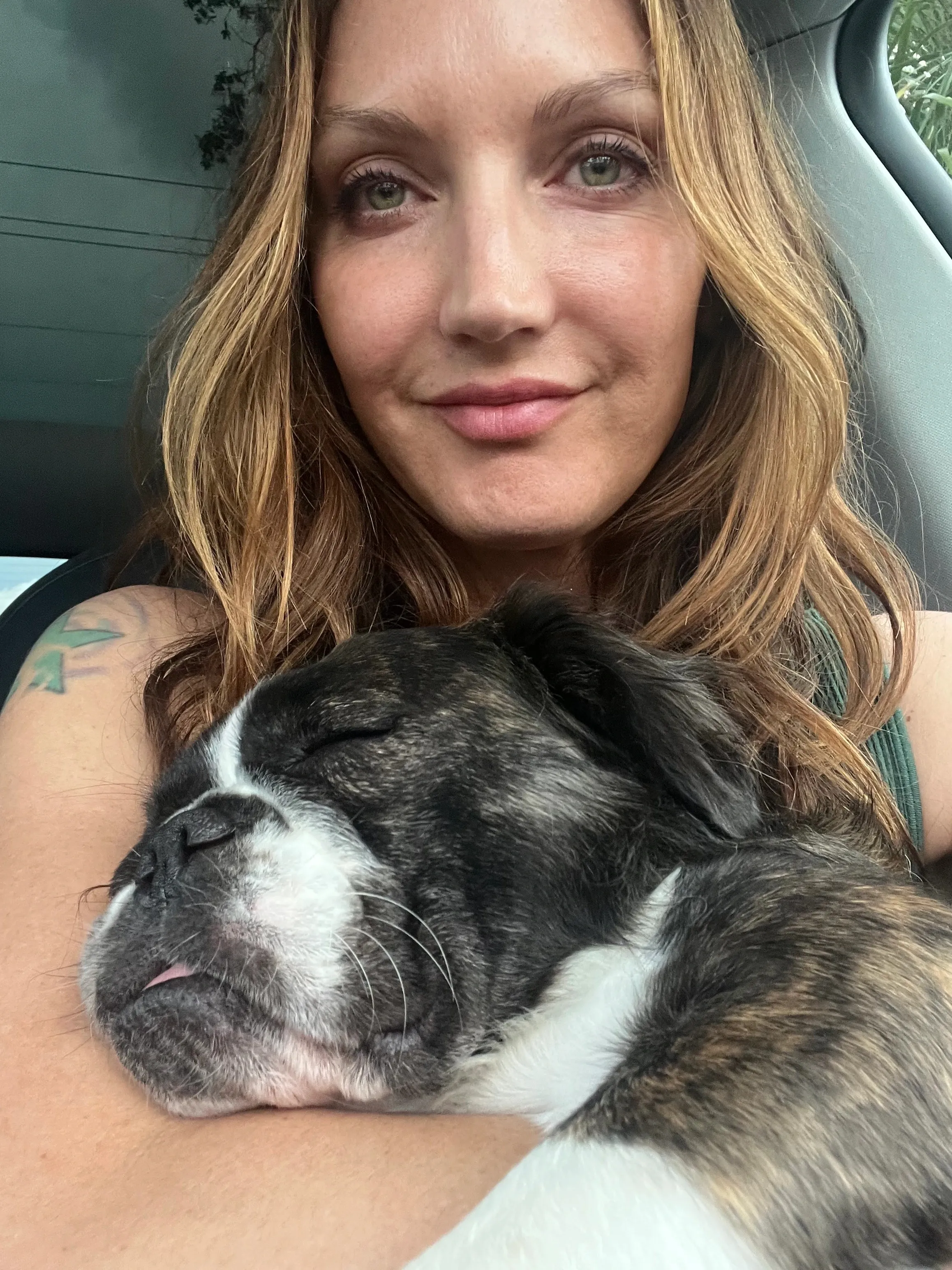
Woman snuggling a Royal Frenchel close inside a car.
Anahata Graceland standing outdoors with Royal Frenchels nearby.

A Note from Anahata

I have spent my life with dogs, and I can tell you this with certainty: dogs are always communicating. The tragedy is not that they do not speak. The tragedy is that humans often do not slow down enough to listen. When we begin treating dogs as beloved individuals — real dogs, real companions, real lives with needs, preferences, moods, intelligence, and heart — everything begins to change. Training changes.

Trust changes.

Housebreaking changes.

Travel changes.

Manners change.

The home changes.

The human changes too. This is the heart of The Way of the Dog and the Royal Frenchel Way of Life. Dogs are not objects to manage. They are companions to know. They are not here to be turned into people. They are here to invite us into a better way of relationship — one that includes witness, care, attention, humor, intuition, and love. That is interspecies communication. Not a performance. A way of life.
Frequently Asked Questions
Have more question? Please reach out to us and we will get back to you as soon as possible.
Contact us
What is interspecies communication with dogs?
Interspecies communication with dogs is the practice of building a real relationship through attention, trust, body language, rhythm, care, and emotional awareness. It is not about turning dogs into people. It is about learning your dog as a beloved individual.
Is interspecies communication the same as dog training?
No. Training teaches behaviors and manners. Interspecies communication is the relationship foundation underneath training. When your dog trusts you and you understand your dog, training becomes much more natural.
Can anyone learn to communicate better with their dog?
Yes. You do not need to be special or mystical. Begin by witnessing your dog, meeting their physical needs consistently, giving them focused attention every day, and noticing how they communicate through body language and behavior.
What are Anahata’s three laws for living well with dogs?
The three core practices are witnessing your dog, providing consistent physical care, and giving attentive interaction. Once these are in place, the dog can also be held to clear responsibilities inside the family rhythm.
How does 5 Minute Hands-On Play support communication?
5 Minute Hands-On Play gives your dog focused attention through gentle touch, eye contact, curiosity, and presence. It helps your dog feel seen, safe, and connected, which can support trust, listening, housebreaking rhythm, and the bond.
Is this approach from The Way of the Dog?
Yes. The Way of the Dog is Anahata Graceland’s book on intuitive bonding and creating an interspecies culture with your dog. This page reflects the same relationship-based philosophy.
Are Royal Frenchels especially good for interspecies communication?
Royal Frenchels often respond beautifully because they are emotionally intelligent, relational companion dogs. They tend to watch their people, learn routines, and want to belong in the home rhythm.
Does interspecies communication mean never correcting my dog?
No. Dogs still need structure, manners, and correction when needed. But correction should happen inside a relationship built on trust, care, and attention — not as a substitute for relationship.
How does this help with housebreaking?
Housebreaking becomes easier when the puppy trusts you, you notice their signals, and the home has a clear potty rhythm. 5 Minute Hands-On Play after potty success can help make the pattern more meaningful and positive.
Can children learn interspecies communication?
Yes, with adult guidance. Children can learn to notice a dog’s body language, use gentle hands, respect rest, and understand that dogs are living beings with feelings and needs.
Is interspecies communication only for Royal Frenchels?
No. This practice can help many dogs and many people. Royal Frenchels often respond especially well because they are bred for relationship and emotional connection.
Where should I begin?
Begin with five minutes of full attention each day. Witness your dog, meet their needs consistently, and practice 5 Minute Hands-On Play. Over time, you will begin to notice more and understand more.
From Regular to Super-Micro

Begin the Conversation with Your Dog

Tonight, take five minutes.Put the phone down.Look at your dog with wonder.Ask who they are. Notice how they answer with their eyes, body, softness, movement, and presence. Touch gently. Listen. Let yourself not know everything. Let the relationship teach you.
With love and wiggle bums,

Anahata & the Pack